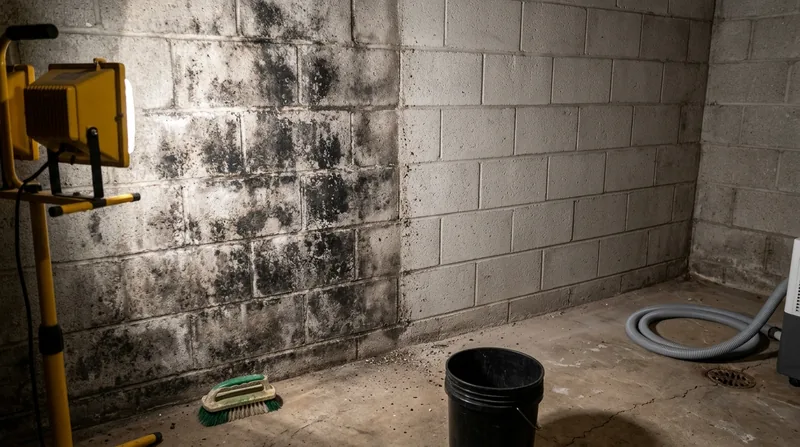




If you smell that earthy, musty odor every time you walk down the stairs, you are likely dealing with Basement Mold Remediation in Nashville territory. Nashville sits in the Nashville Basin on thin rocky red clay over Ordovician limestone, and that geology sends water toward foundations from every direction. In East Nashville and Sylvan Park, 1920s brick bungalows on partial basements collect seepage through old stone and block walls. In Crieve Hall and Donelson, 1950s ranches with partly finished basements grow mold behind paneling after a wet spring. Out in Brentwood and Mount Juliet, walkout basements step down hillsides and take runoff straight against the downhill wall. We fix the moisture first, then treat the mold, because remediation without a drainage fix is just a repeat customer. Call (629) 243-3552 and we will trace the water to its source, not just scrub the drywall. Start with a free basement inspection so we can see what the framing and block are actually telling us.
Why Mold Takes Hold in Nashville Basements and What Drives It
Mold needs three things: food (paper, wood, drywall), a surface, and sustained moisture. Nashville delivers the third in bulk. Our humid summers keep basement air heavy, and the high water table in low spots along the Cumberland River, Mill Creek, and Richland Creek pushes groundwater against footing drains that were often installed decades ago and are now clogged with clay. Add hillside runoff from the ridges above and you get hydrostatic pressure seeping through block joints and hairline cracks, which is exactly where mold colonies start.
- Efflorescence, that white chalky powder on block walls, tells you water is moving through the masonry and evaporating inside.
- Peeling paint or bubbling drywall at the base of a wall points to capillary wicking from the footing.
- A musty smell that gets stronger after rain usually means wet framing behind finished surfaces, not just damp air.
- Rusty nail heads and dark staining on bottom plates show where moisture has been sitting long enough to feed growth.
Any one of those signals is worth a look before the problem spreads from one wall cavity to the whole finished side of the basement.
Key info: A 1960s split-level in Inglewood had a finished basement that smelled musty every June. The culprit was not a leaky pipe but a failed footing drain buried in red clay, sending water under the slab and up through the cove base. Sealing the wall alone would have trapped the moisture behind the paneling.
For official guidance on moisture and mold in buildings, the U.S. EPA maintains a plain-language resource at epa.gov/mold that covers moisture control and remediation basics.
How We Run Basement Mold Remediation in Nashville, Step by Step
We do not fog a basement and call it done. Our process starts below grade, because that is where the water is coming from. We map the moisture with a meter and thermal camera, find the entry point (wall crack, cove joint, floor drain, or failed drain tile), and build the remediation around that finding. If the source is hydrostatic pressure, no amount of surface treatment will hold, and we say so plainly.
- We contain the work area with plastic sheeting and negative air pressure so spores do not migrate into the rest of the house.
- We remove porous materials that cannot be cleaned (wet drywall, insulation, saturated cardboard, damaged framing) and bag them for disposal.
- We HEPA-vacuum and wire-brush the affected block, joists, and slab, then apply a mold-specific treatment to the cleaned surfaces.
- We dry the space with commercial dehumidifiers and air movers until framing moisture reads normal for Nashville's summer humidity.
- We fix the water path: epoxy or polyurethane injection for a cracked wall, an interior drain tile system tied to a sump basin for hydrostatic pressure, or grading and downspout extension for surface water.
- We verify with a final moisture reading and give you a written summary of what was treated and what was repaired.
The last step is the one that matters most, because remediation without moisture control just resets the clock.
Key info: A finished walkout in Franklin had mold on the lower two feet of the downhill wall. We removed the affected drywall, treated the block, and found the real problem was a clogged footing drain and a downspout dumping at the corner. We tied a new sump and discharge line into the system and extended the downspouts, which stopped the water before it reached the wall.
Remediation Approaches We Use in Nashville Basements
Not every mold job is the same, and the right approach depends on where the moisture is coming from and how far the growth has spread. The table below shows the methods we use most often in Nashville homes, from surface treatment to full drainage correction.
| Approach | Description | Best for |
|---|---|---|
| Containment and surface treatment | Seal the area, HEPA-vacuum, clean and treat affected block, joists, and slab. | Small surface growth on block or framing with a known, fixable moisture source. |
| Material removal and rebuild | Cut out wet drywall, insulation, and damaged framing, then treat the structure behind it. | Finished basements where mold has spread behind paneling or drywall. |
| Drainage correction with sump | Install interior perimeter drain and sump basin to relieve hydrostatic pressure at the footing. | Recurring seepage at the cove joint or through block walls after heavy rain. |
| Crack injection and wall sealing | Epoxy or polyurethane injection for cracks, plus a breathable sealer on block walls. | Isolated wall cracks that weep during spring storms. |
| Dehumidification and vapor control | Commercial drying followed by a vapor barrier and dehumidifier sizing for humid summers. | Basements that stay damp without a visible leak, common in older Nashville homes. |
We pick the lightest approach that actually solves the moisture problem, and we tell you when simple crack sealing is enough.
Basement Mold Remediation Cost in Nashville: What to Expect
Most basement mold remediation in Nashville starts around $1,500 for a contained job with a clear moisture source and limited surface growth. That figure covers containment, HEPA vacuuming, treatment, and drying. The number climbs when we have to remove and replace finished materials, when the affected area is large, or when the real fix is drainage work such as an interior drain tile system or a sump pump replacement. A finished walkout in Brentwood with mold behind paneling costs more to remediate than an unfinished block wall in Goodlettsville, and the drainage correction is priced separately because it is a different job.
We recommend getting two or three estimates and asking each contractor to explain the moisture source, not just the mold. A quote that only covers scrubbing surfaces without addressing the water path is incomplete. Our full pricing overview breaks down the ranges so you can compare apples to apples.
Basement Mold Remediation Near Me: How to Vet a Contractor in Nashville
When you search for basement mold remediation near me, you will get a mix of general handymen, restoration franchises, and dedicated waterproofing specialists. Ask each one the same questions before you sign anything. A contractor who cannot explain how water is entering your basement is guessing, and guessing is expensive when it comes to mold.
- Confirm the contractor is licensed and insured in Tennessee, and ask for a certificate of insurance before work begins.
- Get at least two or three written estimates that separate remediation from drainage repair so you can see what each line item covers.
- Ask for local references from Nashville-area homes with similar foundations, especially older block or stone walls.
- Ask whether the work triggers a permit; structural repair, egress work, and changes to sump discharge drainage can require one, and the local building department has the final say.
- Check for HOA rules if you live in a subdivision in Nolensville or Mount Juliet, since exterior discharge and grading changes sometimes need approval.
If a contractor cannot answer those questions clearly, keep looking. You can also contact us with photos of the affected area and we will tell you what we see before anyone comes out.
Mold in a Nashville basement is a symptom, not the disease. The disease is water, and it always has a path. We find that path, fix it, and clean up what the moisture left behind. Call (629) 243-3552 to schedule a free inspection and get a straight answer about what your basement needs.
Basement Mold Remediation in Nashville: Pricing Guide
| Service | Price | Details |
|---|---|---|
| Containment and surface treatment | Starting at $1,500 | Includes containment, HEPA vacuuming, surface treatment, and drying for limited growth with a known moisture source. |
| Material removal and rebuild | Starting at $2,800 | Covers removal of wet drywall, insulation, and damaged framing plus treatment of the structure behind it. |
| Drainage correction with sump | On estimate | Interior drain tile and sump work is scoped on site because footing depth, wall type, and discharge route vary by home. |
| Crack injection and wall sealing | Starting at $650 | Epoxy or polyurethane injection for isolated cracks, priced by crack length and wall access. |
| Travel | Included | in Nashville and surrounding areas, no separate call-out or mileage fee. |
| Estimate | Free | Response within 24h at (629) 243-3552, no obligation to book. |
Indicative pricing, the exact cost depends on square footage, finish, and site access. Free personalized estimate within 24h at (629) 243-3552.


