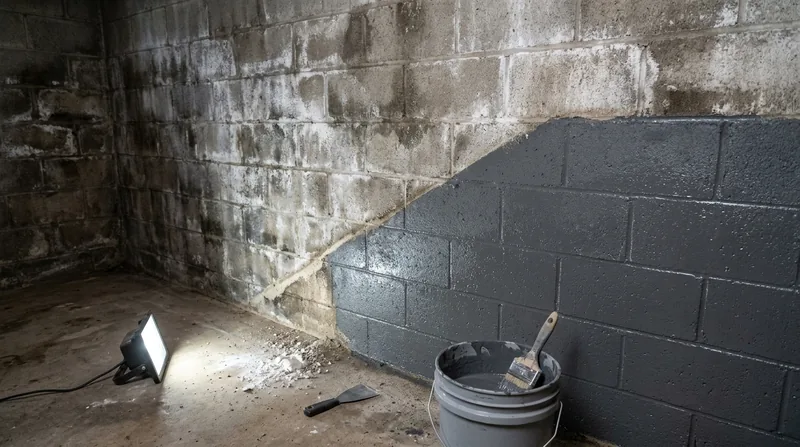




Basement Wall Sealing in Nashville: Stop the Damp Before It Spreads
Nashville sits on thin rocky red clay over Ordovician limestone, and that geology decides how basement walls behave. In East Nashville, Sylvan Park, and Germantown, 1910s to 1940s brick and block walls wick groundwater after every spring downpour. In Crieve Hall and Donelson, 1950s and 1960s ranches show white efflorescence blooms and peeling paint on the lower block courses. Basement Wall Sealing in Nashville starts with an honest diagnosis: is this minor surface dampness, or is hydrostatic pressure pushing water through the wall? We prep, remove efflorescence, and apply penetrating or membrane sealers where sealing is the right answer. When the wall is weeping under pressure, we tell you that a sealer alone will not hold and point you to the right system. Call basement waterproofing at (629) 243-3552 for a free inspection.
Why Nashville Basement Walls Stay Damp
The Nashville Basin drains poorly. Red clay holds water against the foundation, limestone underneath creates springs and karst pockets, and the water table rises in low spots along the Cumberland River, Mill Creek, and Richland Creek. Add heavy spring downpours, flash floods like 2010, and a few freeze-thaw nights each winter, and you get walls that stay wet for weeks. Sealing helps only when the source is surface dampness, not active pressure.
- Old stone and block walls in East Nashville and Belmont absorb groundwater and show efflorescence within days of a storm.
- Brick ranches in Inglewood and Madison develop hairline mortar cracks that let dampness through the wall face.
- Walkout basements in Brentwood and Franklin take hillside runoff against the downhill wall, which sealers cannot stop alone.
- Flat-lot slab homes in Nolensville and Mount Juliet have no basement, so wall sealing does not apply to them.
If your wall is wet to the touch after rain, start with a free inspection before you buy a bucket of sealer.
Key info: A 1930s Tudor cottage in Belmont had efflorescence on the lower block and a musty smell after every storm. The wall was damp but not under pressure. Efflorescence removal plus a penetrating sealer solved it. A similar-looking wall in Donelson was weeping at the cove joint, and that one needed an interior perimeter drain, not sealer.
Permits for work that alters drainage or the sanitary connection of a sump discharge vary by jurisdiction. Verify with the Metro Nashville Codes Department before work begins.
How We Seal a Basement Wall in Nashville
We do not sell sealer as a cure-all. The first step is always diagnosis: we look at the wall, the cove joint, the footing drain, and the grading. If the wall is damp from surface moisture, we seal. If water is pushing through under hydrostatic pressure, we say so and explain the alternatives, including an interior drain tile system that relieves pressure at the footing.
- We inspect the wall and test for active seepage, then photograph the efflorescence and any crack patterns.
- We remove efflorescence with a dry brush and a mild acid wash, then let the masonry dry.
- We fill hairline cracks and voids with hydraulic cement or epoxy injection where the crack is structural.
- We apply a penetrating sealer on block and brick, or a membrane sealer on poured concrete, depending on the wall.
- We check grading and downspout extensions so roof water stops running back against the wall.
Every job ends with a written note on what we sealed and what we did not, so you know what to watch.
Key info: A split-level in Crieve Hall had a partly finished basement with damp lower block and peeling paint. We sealed the block and extended two downspouts. Six months later the wall was dry. A walkout in Franklin with water at the cove joint after storms was a different problem, and we recommended interior drainage instead of sealer.
Sealing Methods We Use on Nashville Basement Walls
Not every wall takes the same product. Old brick, stone, block, and poured concrete behave differently, and the wrong sealer traps moisture instead of stopping it. Here is how we match the method to the wall.
| Approach | Description | Best for |
|---|---|---|
| Penetrating sealer | Sinks into block and brick pores and reacts with lime to block capillary water. | Damp block walls in East Nashville and Inglewood. |
| Membrane sealer | Forms a flexible film on poured concrete and bridges hairline cracks. | Poured walkout walls in Brentwood and Franklin. |
| Epoxy injection | Pumps structural epoxy into cracks to bond and seal them. | Non-moving structural cracks in poured walls. |
| Polyurethane injection | Expands inside wet cracks to stop active seepage. | Active leaks and moving cracks in old walls. |
| Parging repair | Replaces failed mortar coat on stone and block before sealing. | Crumbling parging on 1920s walls in Germantown. |
We choose the method after we see the wall, not before.
Basement Wall Sealing Cost in Nashville: What to Expect
Most basement wall sealing jobs in Nashville start around $1,500 and go up from there. A simple block wall with efflorescence and no active leak is at the low end. A partly finished basement with multiple rooms, tall walls, or extensive crack injection pushes the number higher. Access matters too: a walkout in Franklin with a finished lower level takes more prep than an unfinished basement in Donelson.
We base the price on linear feet of wall, wall material, how much efflorescence and parging repair is needed, and whether cracks require injection. Getting two or three estimates is smart, and we will tell you if a cheaper sealer-only quote is likely to fail. See the full pricing overview for detail, or call (629) 243-3552 for a free inspection.
Basement Wall Sealing Near Me: How to Vet a Nashville Contractor
Anyone can buy a pail of sealer and a sprayer. The difference is diagnosis. A contractor who seals a wall that is under hydrostatic pressure will take your money and the leak will return. Ask questions before you sign.
- Confirm the contractor is licensed and insured, and ask for a certificate of insurance before work starts.
- Get two or three written estimates that specify the sealer type and the prep work included.
- Ask for references from jobs in your part of Nashville, not just a generic list.
- Ask whether the work needs a permit from Metro Nashville Codes, especially if drainage or a sump discharge is altered.
- Ask what happens if the wall is still damp after sealing, and get the answer in writing.
If a contractor promises a lifetime warranty or guarantees the wall will never be wet again, keep looking.
We are a dedicated basement waterproofing specialist, not a general foundation firm or a plumber. Call contact and free estimate at (629) 243-3552 to schedule an inspection.
Basement Wall Sealing in Nashville: Pricing Guide
| Service | Price | Details |
|---|---|---|
| Block wall sealing with efflorescence removal | Starting at $1,500 | Includes dry brush and acid wash, penetrating sealer on up to 60 linear feet of block wall. |
| Poured concrete wall sealing | Starting at $1,800 | Includes membrane sealer and hairline crack prep on unfinished poured walls up to 60 linear feet. |
| Crack injection add-on | Starting at $450 per crack | Epoxy or polyurethane injection with ports, priced per crack and dependent on crack length and activity. |
| Large or finished basement | On estimate | Finished rooms, tall walls, and walkout grades need an on-site look before we quote a number. |
| Travel | Included | In Nashville and surrounding areas, no separate call-out or mileage fee. |
| Estimate | Free | Response within 24h at (629) 243-3552, no obligation to book. |
Indicative pricing, the exact cost depends on square footage, finish, and site access. Free personalized estimate within 24h at (629) 243-3552.


