Why Older Homes in Nashville Are Prone to Foundation Issues
If you own a home in Nashville, especially in historic neighborhoods like East Nashville, you already know that character comes with quirks. But those charming older homes often sit on foundations that were built with materials and methods far different from today's standards. Many were constructed with stone, brick, or early poured concrete that has spent decades expanding, contracting, and absorbing moisture from our clay-heavy soil. Over time, that constant cycle takes a toll.
Nashville's climate adds another layer of stress. Wet winters, humid summers, and occasional drought periods cause the soil around a foundation to swell and shrink repeatedly. This movement puts uneven pressure on basement walls and footings, leading to the foundation problems signs that homeowners often overlook until they become expensive. Understanding what to look for below grade is the first step toward protecting your investment and avoiding a major older home foundation repair down the road.
Basement Wall Cracks: What's Normal and What's Not
Not every crack in a basement wall is a crisis, but in an older home, cracks deserve a closer look. Hairline vertical cracks are often caused by concrete shrinkage during curing and may be relatively harmless. However, horizontal cracks, stair-step cracks in block walls, and cracks wider than a quarter inch are red flags. These patterns typically indicate soil pressure pushing against the wall or settlement beneath the footing. If you see moisture staining, efflorescence (white powdery residue), or actual water seeping through, the crack is active and needs attention.
In East Nashville historic homes, basement wall cracks often appear alongside other subtle clues like sticking doors, uneven floors, or gaps around window frames. These are signs that the foundation is moving and the structure above is adjusting. Ignoring them allows water to enter and freeze, widening cracks further. A professional assessment can determine whether the issue is cosmetic or structural, and whether Basement Waterproofing is needed to stop moisture intrusion before it worsens.
Bowing Basement Walls: A Sign You Shouldn't Ignore
A bowing basement wall is one of the most serious warning signs a homeowner can encounter. Unlike a crack, bowing means the wall is actually deflecting inward, usually due to hydrostatic pressure from saturated soil outside. You might notice the wall leaning away from you when you stand at the bottom of the stairs, or you may see horizontal cracks that run the length of the wall. In severe cases, the top or bottom of the wall may have shifted several inches. This is not a cosmetic issue; it compromises the structural integrity of your home.
Older homes are especially vulnerable because their walls were often built with unreinforced masonry or thinner concrete. When the soil outside becomes heavy with water and cannot drain properly, it pushes against the wall with tremendous force. If you suspect bowing, do not wait. Foundation Waterproofing and potentially wall stabilization are needed to prevent further movement. Addressing the problem early can save you from a full wall replacement and the significant pricing that comes with it.
Moisture, Mold, and Musty Odors: Below-Grade Clues
Sometimes the earliest signs of foundation trouble are not visible cracks but the conditions they create. A damp, musty smell in your basement or crawl space is a strong indicator that moisture is entering through the foundation. You might notice mold growth on stored items, peeling paint on basement walls, or rust on metal fixtures. These clues point to chronic water intrusion, which is common in older homes where original drainage systems have failed or were never installed. In Brentwood and other nearby communities, homes on sloped lots often face added runoff pressure that exacerbates these issues.
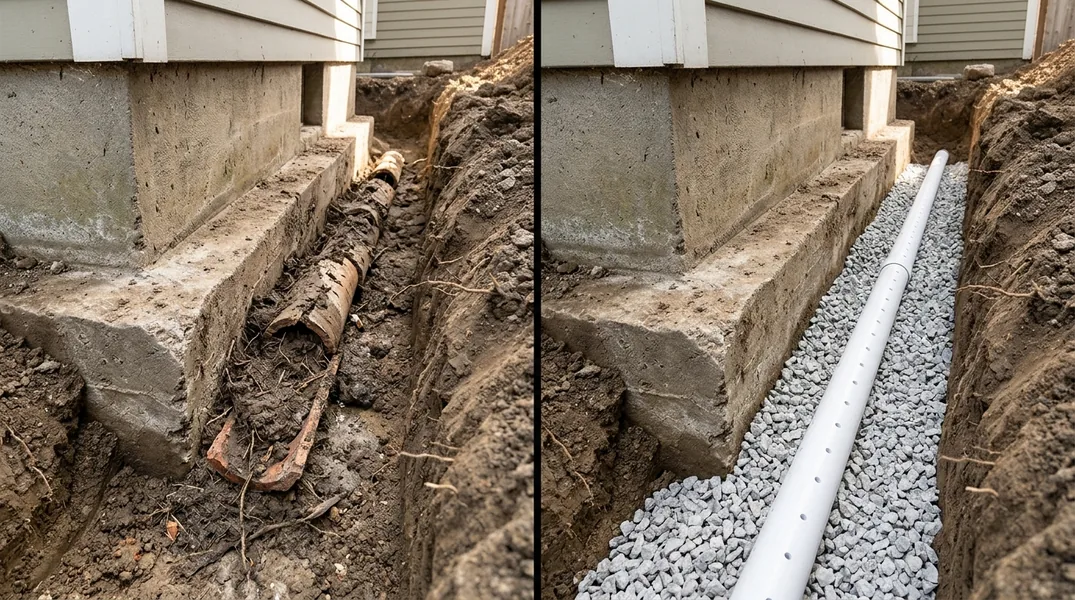
Moisture problems rarely fix themselves. As water continues to seep in, it weakens mortar, rusts reinforcing steel, and creates an environment for mold. An Interior Drain Tile System can capture water before it reaches your floor, while Exterior Basement Waterproofing addresses the source by improving drainage and sealing the exterior foundation. The right solution depends on your home's specific situation, which is why a professional evaluation is essential.
Foundation Problems Signs Near Me: When to Call a Professional
If you have noticed any of the signs discussed here, you may be wondering whether it is time to call a professional. A good rule of thumb: if you see horizontal cracks, bowing walls, or water actively entering your basement, you need an expert opinion. Even if the signs seem minor, an older home foundation can deteriorate quickly once movement begins. A professional can identify the root cause, whether it is soil pressure, poor drainage, or settlement, and recommend the most cost-effective repair strategy.
Homeowners in Franklin and Murfreesboro face similar challenges with expansive clay soils and aging foundations. The sooner you address foundation problems signs, the more options you have and the less likely you are to face major structural repairs. If you are ready to protect your home, reach out to Nashville Waterproofing for a free estimate. You can also call us directly at (629) 243-3552 to speak with a local expert who understands the unique needs of older Nashville homes.
Looking for a professional basement waterproofing contractor in Nashville? Nashville Waterproofing responds fast for all your basement waterproofing needs.
Get a Free QuoteOur services: Basement Waterproofing · Interior Drain Tile System · Exterior Basement Waterproofing