Why Sump Pump Maintenance Matters Before Nashville's Spring Rain Season
Spring in Nashville brings more than blooming dogwoods and longer evenings. It brings intense, sustained rainfall that saturates the soil around your foundation and sends groundwater rushing toward your basement. For homeowners in Brentwood and Franklin, that means your sump pump is about to become the hardest-working appliance in the house. If it has been sitting idle since last fall, it deserves a careful inspection before the first big storm rolls through.
A sump pump that fails during a spring downpour can turn a finished basement into a costly recovery project in a matter of hours. The good news is that most failures are preventable. A simple seasonal routine, covering the pump itself, the discharge line, the Basement Waterproofing system it connects to, and your backup power, will dramatically reduce the odds of storm basement flooding. Think of it as a pre-season tune-up for the equipment that protects your home's lowest level.
The Sump Pump Maintenance Checklist Every Homeowner Should Run
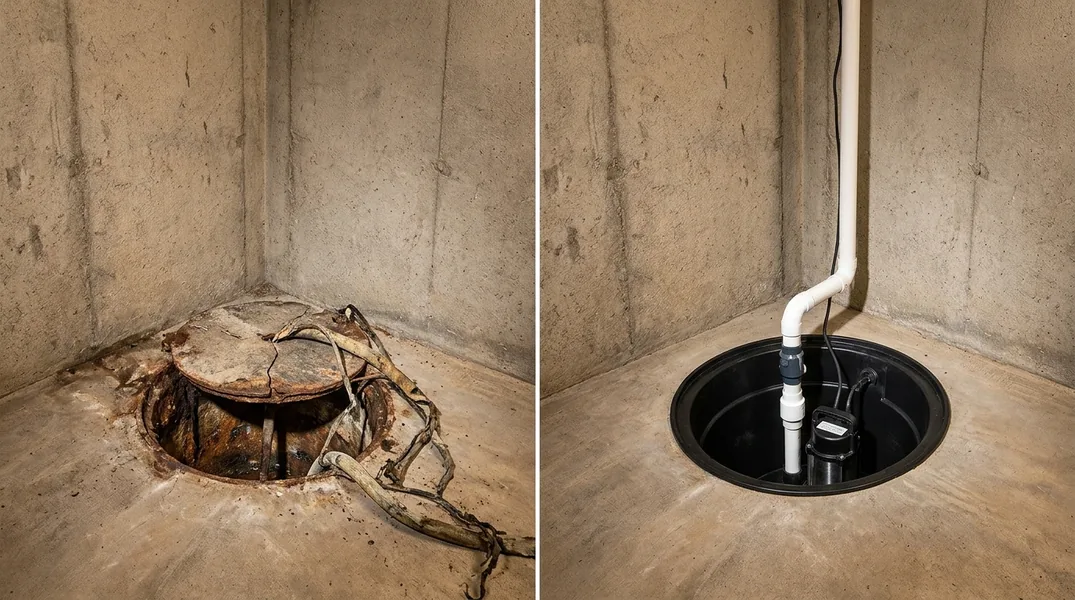
Start by unplugging the pump and removing the lid from the sump pit. Look for debris, silt, or gravel that has collected around the float, since a stuck float is one of the most common reasons a pump refuses to turn on. Pour a few gallons of water into the pit and plug the pump back in to confirm it kicks on and drains the pit completely. While the pump runs, listen for grinding or rattling sounds and check that the motor does not overheat. If the pump is more than seven to ten years old or has been cycling frequently, it may be time to replace it before the rain arrives.
Next, inspect the discharge pipe and the outlet outside the house. The line should slope upward and away from the foundation, and the exterior end must be clear of leaves, ice, or landscaping debris. A clogged or frozen discharge line is a silent killer: the pump runs, but the water has nowhere to go, and it can back up into your basement. If your system relies on an Interior Drain Tile System, take a moment to confirm the drain openings are clear and that water flows freely into the sump pit. Any standing water or damp spots along the perimeter are worth investigating now, not during a storm.
Don't Ignore the Sump Pump Check Valve and Battery Backup Sump Pump
Two components are frequently overlooked and both are critical during spring storms. The sump pump check valve is a one-way gate that stops water from flowing back into the pit after the pump shuts off. Without a working check valve, every cycle sends water back down the discharge line, forcing the pump to work harder and run more often. Inspect the valve for mineral buildup or a stuck flapper, and replace it if it is more than a few years old. It is an inexpensive part that protects both your pump and your basement floor.
A battery backup sump pump is the second line of defense, and it matters more in Nashville than many homeowners realize. Spring thunderstorms regularly knock out power, and a primary pump that depends on grid electricity will sit idle exactly when you need it most. Test the backup unit by simulating a power failure and confirming it activates, then check that the battery holds a charge and the terminals are clean. If your backup battery is more than three to five years old, plan to replace it before storm season. Pairing a reliable primary pump with a charged backup is the simplest way to avoid storm basement flooding when the lights go out.
When Sump Pump Maintenance Isn't Enough: Signs You Need a Pro
Sometimes maintenance reveals a deeper problem. If you notice water seeping through basement walls or floor joints even when the pump is running, the issue may not be the pump at all. It could be a failing Foundation Waterproofing barrier, a cracked footing drain, or hydrostatic pressure that no sump pump can fully relieve on its own. Homeowners in Murfreesboro and across the region often discover these problems after a heavy rain, when dampness reappears in the same corner year after year.
If your pump runs constantly, cycles every few minutes, or the pit refills immediately after draining, call a professional to evaluate the system. Sometimes the fix is as simple as a new check valve or a larger pit. Other times, Exterior Basement Waterproofing or a redesigned drainage system is the right long-term answer. A trained eye can tell the difference quickly, and catching the problem before spring rains arrive saves both money and stress. If you are unsure whether your current setup is ready, a free estimate is a smart first step.
Sump Pump Maintenance Near Me: Scheduling a Spring Tune-Up in Nashville
If you would rather hand the checklist to a professional, local help is closer than you think. A spring tune-up typically includes testing the pump and float, inspecting the check valve, flushing the discharge line, checking the backup battery, and confirming the pit and drain tile are clear. It is a modest investment compared with the cost of water damage, and it gives you confidence going into the wettest months of the year. For homeowners comparing options, our pricing page outlines typical service ranges so you know what to expect before you call.
At Nashville Waterproofing, we help homeowners across the Nashville area prepare their basements for spring storms with thorough inspections and honest recommendations. Whether you need a quick sump pump check, a new check valve, or a full evaluation of your drainage and waterproofing system, our team can help you avoid storm basement flooding this season. Call (629) 243-3552 to schedule your spring tune-up, or reach out online for a free estimate and take the first step toward a dry basement.
Looking for a professional basement waterproofing contractor in Nashville? Nashville Waterproofing responds fast for all your basement waterproofing needs.
Get a Free QuoteOur services: Basement Waterproofing · Interior Drain Tile System · Exterior Basement Waterproofing